
In summary: Dental malocclusion is an incorrect relationship between the upper and lower teeth, or between the jaws. It can affect chewing, hygiene, and the aesthetics of the smile. Before any orthodontic treatment, a study is necessary to assess the bones, face, teeth, and bite.
What is dental malocclusion?
Occlusion describes how the upper and lower teeth fit together when the mouth is closed. When this fit is not correct, a malocclusion occurs. dental malocclusion. It's not just about crooked teeth: malposition of teeth, differences in size or position between the maxilla and mandible, and habits that alter growth are all part of the same problem.
Therefore, malocclusion can have a dental origin, a skeletal origin, or a combination of both. Distinguishing between them is what determines which treatment makes sense in each case.
Most common types of malocclusion
Malocclusions are described according to the relationship between the dental arches and the position of the teeth. Among the most common are:
- Crowding: lack of space in the arch, so that the teeth overlap or rotate.
- Diastemas: excessive spaces between teeth.
- Overbite: The upper teeth excessively cover the lower teeth.
- Open bite: The front teeth do not make contact when the mouth is closed.
- Crossbite: Some upper teeth are inside the lower teeth.
- Class II and Class III: The upper jaw is positioned forward or backward relative to the lower jaw.
Why is it advisable to treat a dental malocclusion?
A misaligned bite has consequences that go beyond aesthetics. Crowded teeth are more difficult to clean, which promotes plaque buildup, cavities, and gum inflammation. Furthermore, an uneven distribution of forces while chewing can cause wear on some teeth and overload the jaw joint.
In children and adolescents, some malocclusions can affect jaw development if not corrected early. In adults, their treatment is usually part of a broader plan to preserve teeth long-term.
The orthodontic study: how a malocclusion is assessed
No orthodontic treatment should begin without a complete diagnosis. The orthodontic study analyzes four aspects:
- Skeletal: the position and size of the maxilla and mandible, and the relationship between them.
- Facial: the profile, the smile and the position of the lips at rest and when smiling.
- Dental: the position of each tooth in its arch, the available space, and any rotations or inclinations.
- Occlusion: how the upper teeth fit together with the lower teeth when closing and in jaw movements.
This information is used to set treatment goals and plan each phase. From there, the most suitable appliances are selected and the duration of treatment is estimated; these two factors determine the final cost. At Clínica Mayoral, the study is led by Dr. Mª Ángela Mayoral, a specialist in Orthodontics and Pediatric Dentistry at Sant Joan de Déu Hospital and an associate professor in the Department of Orthodontics at UIC Barcelona.
Is dental malocclusion the same in children as in adults?
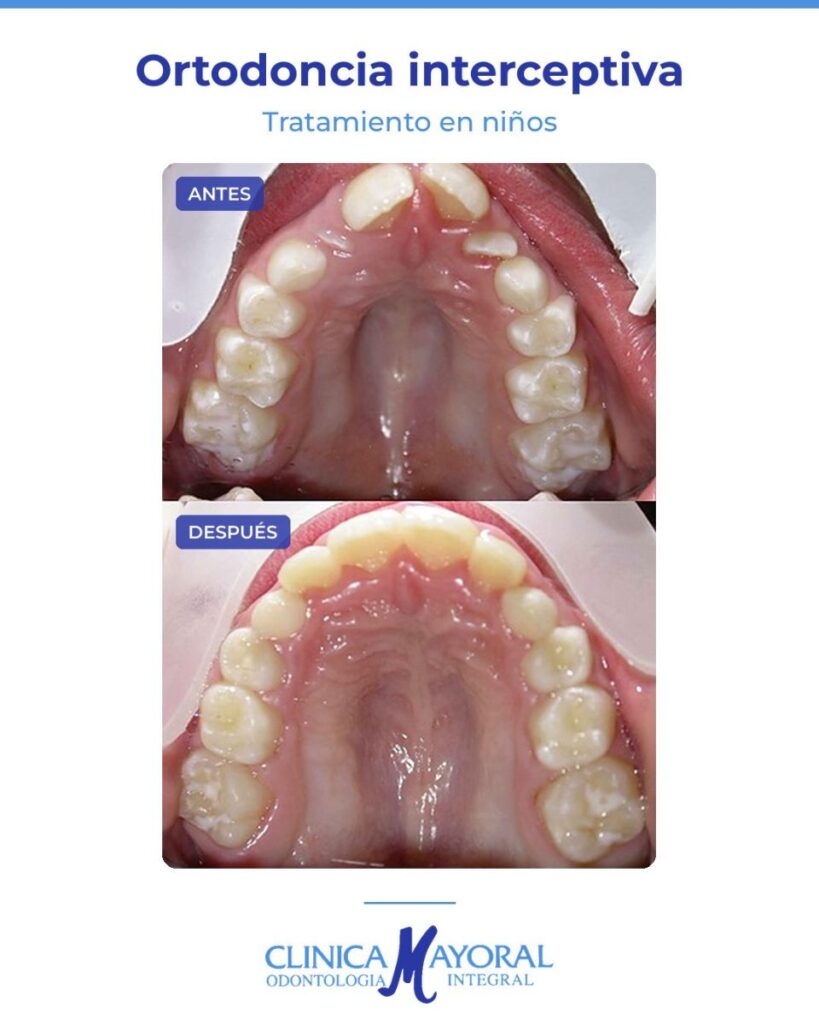
No. The main difference is growth. In children and adolescents, the jaws are still developing, which allows treatment to address the skeletal problem in addition to the dental one. interceptive orthodontics in children Take advantage of this stage to guide growth and prevent the problem from worsening.
In adults, growth has finished. Orthodontics corrects the position of the teeth, but when the cause is a significant discrepancy between the jaws, it may be necessary to combine it with other treatments. orthognathic surgery. In addition, in adults, the condition of the gums and restorations is assessed in more detail before starting treatment.
Dental malocclusion treatment options
The orthodontic appliance is chosen according to the diagnosis, age, and preferences of each patient. The main options are interceptive orthodontics in childhood, metal or ceramic braces, and clear aligners. Orthodontics for children, adolescents, and adults The clinic collects each of them. After treatment, a retention phase keeps the teeth in their new position.
The following images show cases treated at Clínica Mayoral, before and after treatment.
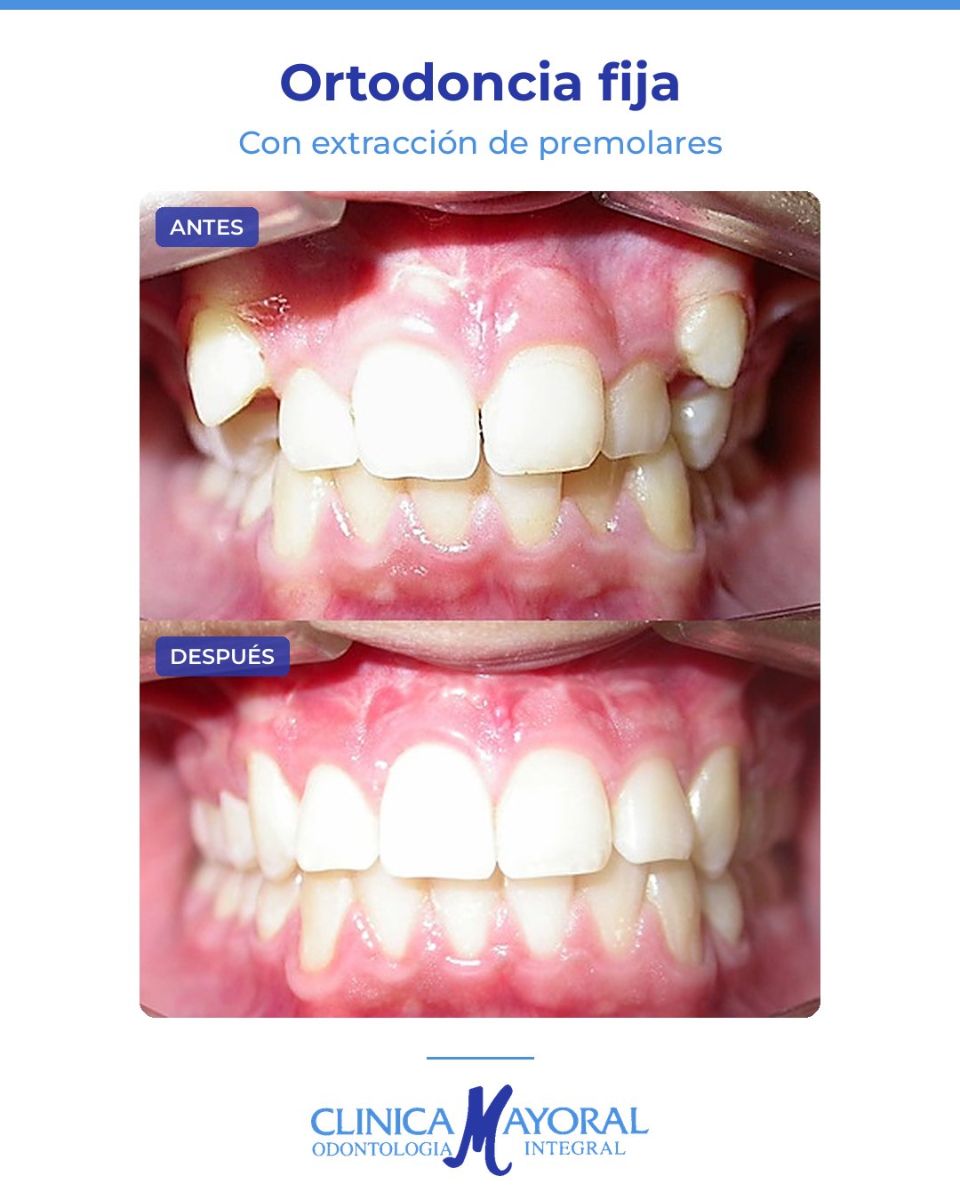
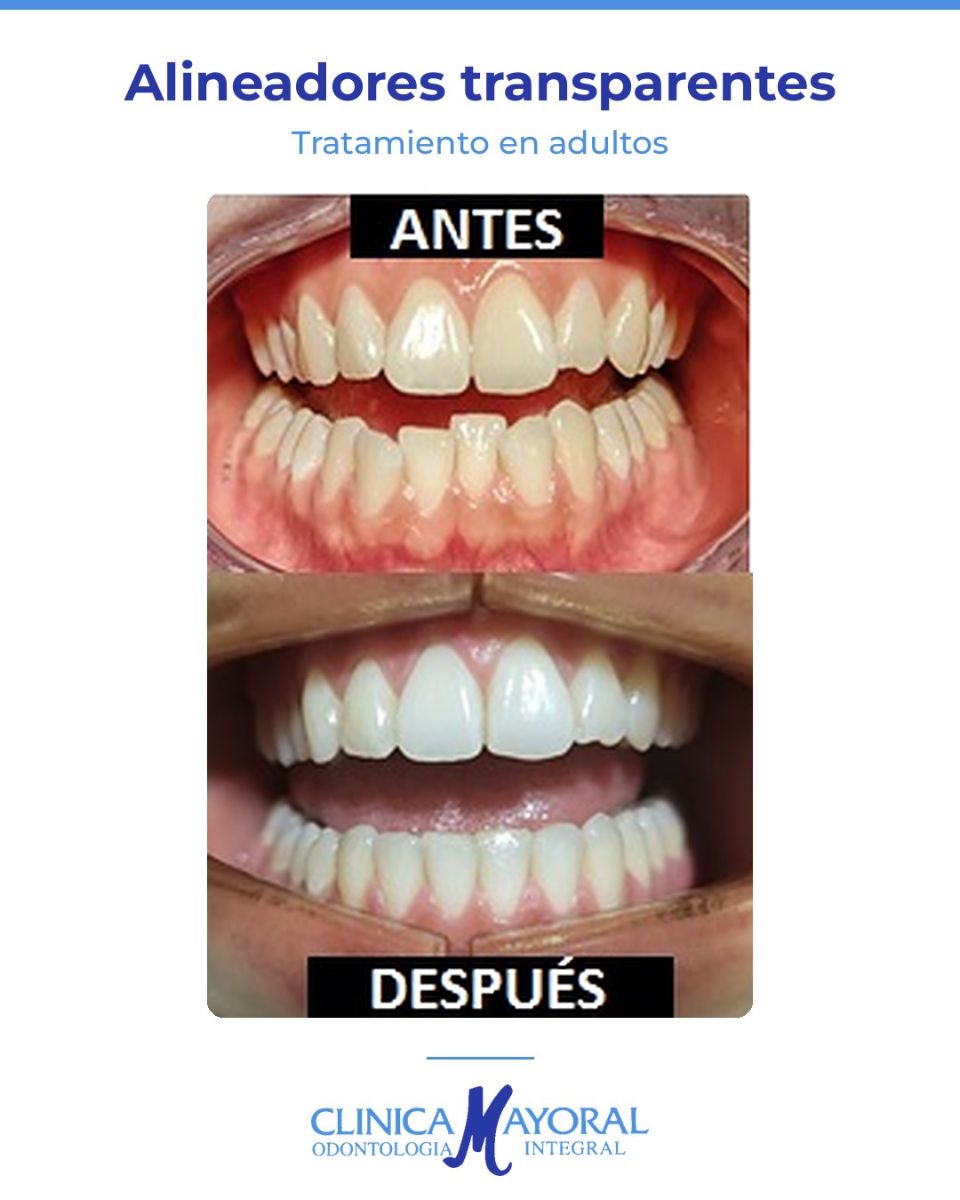
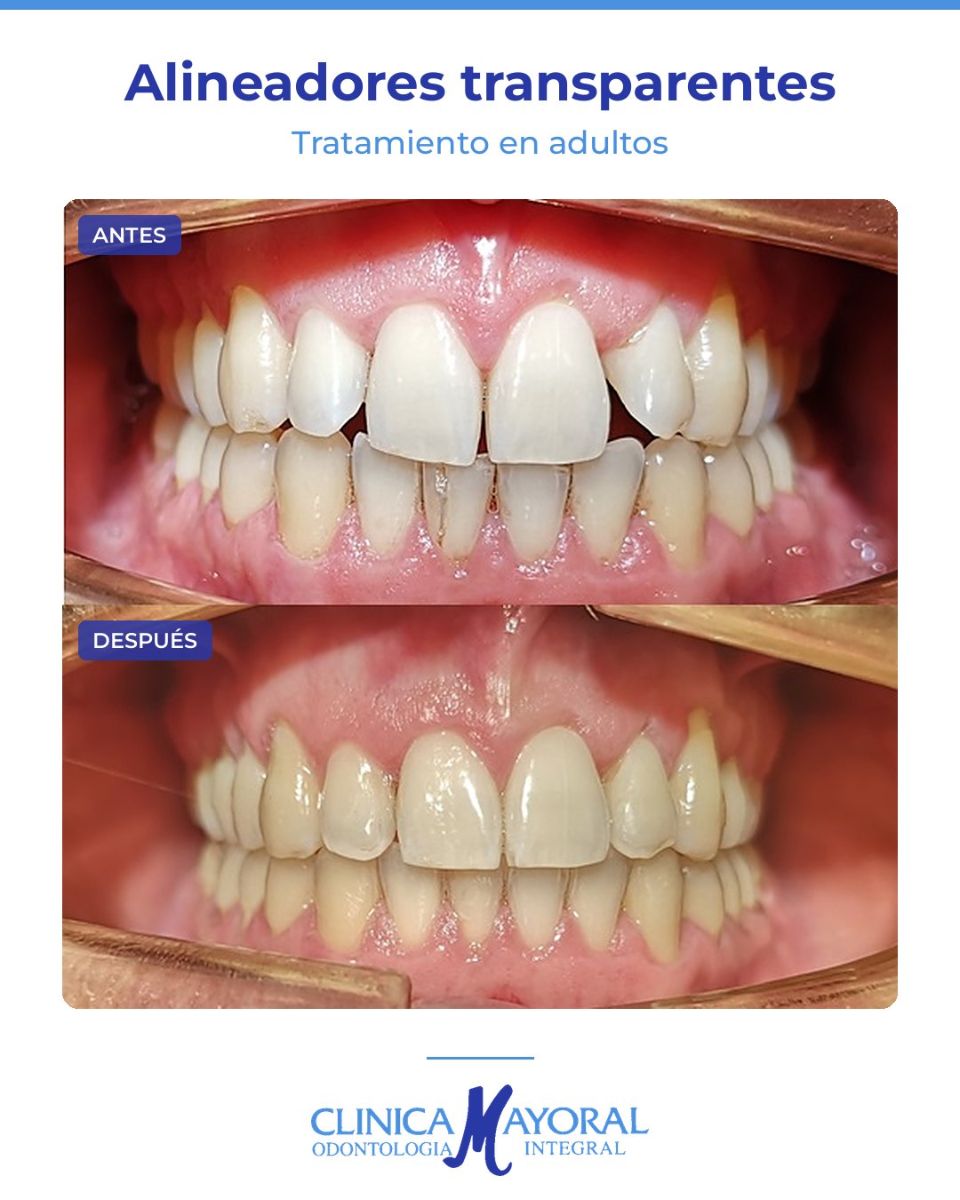
Each case requires an individual plan, which can only be established after clinical assessment and orthodontic study.
Frequently asked questions about dental malocclusion
At what age is it advisable to have a first orthodontic check-up?
A first assessment is recommended around age 6 or 7, when both baby and permanent teeth are present. This allows for the early detection of jaw growth problems.
Can dental malocclusion be corrected in adulthood?
Yes. Orthodontics has no age limit as long as the teeth and gums are healthy. In cases with a significant skeletal component, it can be combined with orthognathic surgery.
How long does orthodontic treatment last?
It depends on the type of malocclusion, the patient's age, and the chosen orthodontic appliance. An orthodontic evaluation allows us to estimate the treatment duration before starting.
What does the orthodontic study include?
Clinical examination, photographs, x-rays and bite registration, which allow analysis of the bones, face, teeth and occlusion to plan treatment.